Did you know that over 70% of indoor plants die due to improper watering?
This staggering statistic highlights a common mistake that many plant lovers make.
In this comprehensive guide, we will explore The Ultimate Guide to Watering Indoor Plants the Right Way, ensuring that your green companions thrive and flourish.
Understanding the right techniques for watering not only enhances the health of your plants but also transforms your living space into a vibrant oasis.
From identifying the signs of overwatering to discovering the best practices for different plant species, this guide promises to equip you with essential knowledge for successful indoor gardening.
Understanding the Importance of Proper Watering
Proper watering is crucial for the health and longevity of indoor plants. Many plant owners underestimate the significance of this aspect, leading to common issues such as overwatering and underwatering.
Both conditions can severely affect plant health, causing stress and even death.
Overwatering is one of the most frequent mistakes made by indoor gardeners.
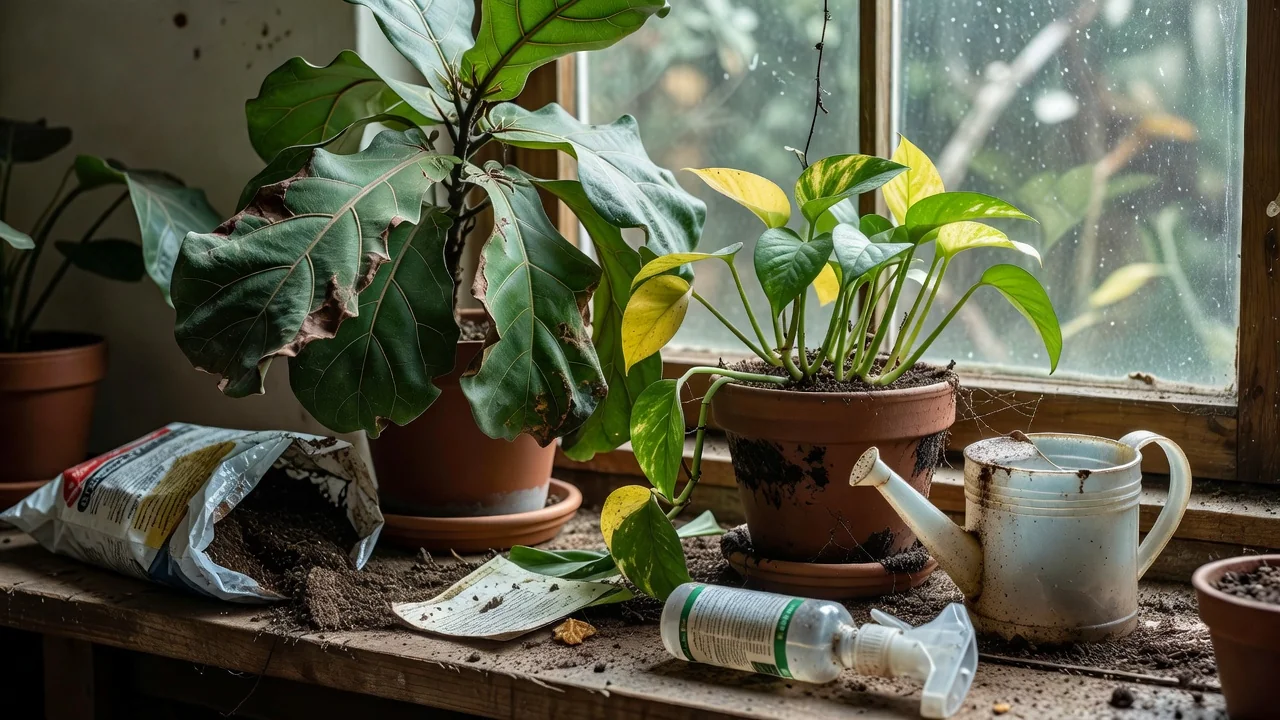
When plants receive too much water, their roots can become waterlogged, leading to root rot.
This condition not only inhibits the plant’s ability to absorb nutrients but can also create an environment conducive to fungal diseases.
For example, a simple houseplant like the peace lily may show signs of distress, such as yellowing leaves, when overwatered.
Conversely, underwatering can lead to wilting and stunted growth.
Plants like succulents, which require less frequent watering, can suffer if moisture is not provided adequately.
By employing appropriate watering techniques, such as checking the soil moisture level before watering, you can significantly enhance your plants’ vitality.
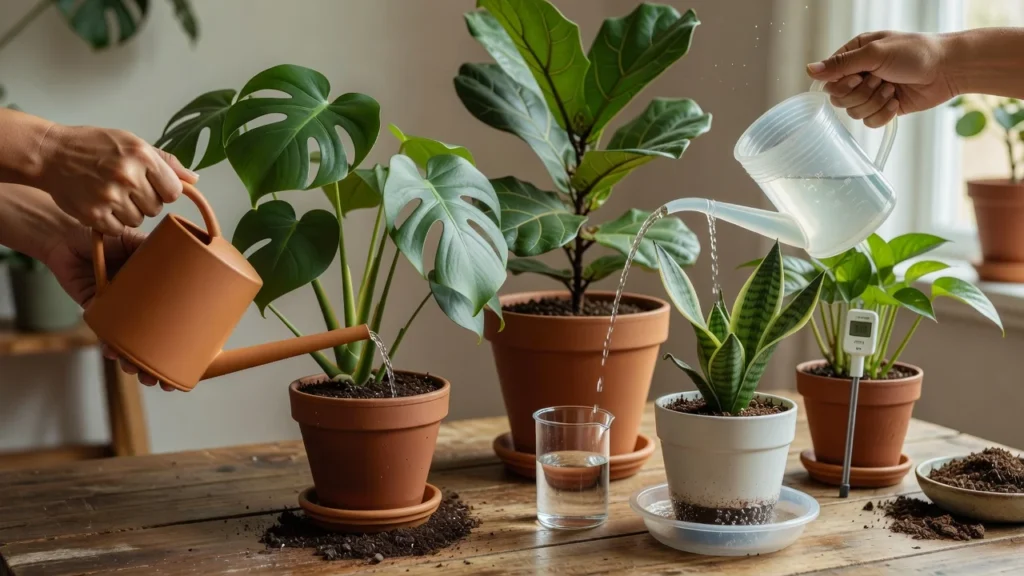
Utilizing tools like moisture meters can help ensure that you are watering your plants just right.
Additionally, varying your watering schedule according to the season can also be beneficial; for instance, indoor plants typically require less water in the winter months.
In conclusion, understanding the importance of proper watering is essential for ensuring your indoor plants thrive.
Implementing effective watering strategies not only promotes healthy growth but also reduces the risk of plant diseases.
For more insights on maintaining plant health, check out Why Your Indoor Plants Are Dying (And How to Save Them).
How to Water Indoor Plants: Best Practices
Watering indoor plants effectively requires understanding their specific needs. Each plant species has unique requirements based on its native environment.
Therefore, knowing when and how much to water is crucial for their health and longevity.
First, let’s discuss when to water your indoor plants.
A common mistake is to adhere to a strict schedule.
Instead, plants should be watered based on their moisture needs and the condition of the soil.
For instance, a simple finger test can be effective; insert your finger about an inch into the soil.
If it feels dry, it’s time to water.
Conversely, if it feels moist, you can wait a few more days.
Additionally, factors such as humidity and light exposure can affect how quickly the soil dries out.
For example, plants in brighter rooms may require more frequent watering than those in low-light conditions.
Next, consider how much water to use based on plant type.
Different plants have varying hydration requirements.
For example, succulents and cacti thrive in dry conditions and may only need watering every two to three weeks.
On the other hand, tropical plants like ferns prefer consistently moist soil.
When watering, aim to saturate the soil evenly until you see water draining from the bottom of the pot.
This ensures that the roots receive adequate moisture, promoting healthy growth.
Remember, overwatering can lead to root rot, a common problem that can harm your plants.
In conclusion, establishing a proper watering routine tailored to each plant’s needs is essential.
By understanding when and how much to water, you can create a thriving indoor garden.
For more tips on maintaining healthy plants, check out How to Keep Indoor Plants Healthy All Year Long.
Water Quality Matters: What to Use
Choosing the right water for your indoor plants is crucial. The quality of water can significantly impact plant health and growth.
While it may seem trivial, the type of water you use—be it tap water or distilled water—can have varying effects on your plants.
Tap water often contains chlorine and other chemicals that municipalities use to treat drinking water.
For many indoor plants, this can be detrimental.
For instance, chlorine can inhibit root development, making it harder for plants to absorb nutrients.
If your tap water has a strong chemical smell, it’s a good indication that it may not be the best choice for your plants.
Instead, consider using distilled water, which is free from these additives and can provide a more stable environment for growth.
Filtering your tap water can also improve its quality.
You can use a simple water filter, which removes harmful substances while retaining essential minerals.
Additionally, allowing tap water to sit out for 24 hours can help dissipate chlorine, making it safer for your plants.
This method is particularly useful for those who may not have access to distilled water.
Overall, the choice of water can greatly influence the health of your indoor plants.
To ensure optimal growth, it’s important to pay attention to water quality and adapt your watering practices accordingly.
For more on keeping your plants thriving, check out How Often Should You Water Your Plants? A Complete Guide.
Adjusting Your Watering Techniques for Different Seasons
Understanding seasonal changes is crucial for maintaining healthy indoor plants. As the seasons shift, so do the watering needs of your plants.
During winter, many indoor plants enter a state of dormancy, which significantly alters their water requirements.
In winter, the drop in temperature and reduced sunlight mean that plants utilize less water.
Therefore, it’s essential to adjust your watering schedule accordingly.
Instead of sticking to a strict routine, assess the moisture level of the soil.
You may find that watering every two weeks is sufficient for most plants.
For instance, succulents, which are popular indoor choices, thrive on minimal watering during these colder months.
They require just enough moisture to prevent wilting, illustrating the importance of adapting your methods as seasons change.
Conversely, summer brings increased evaporation rates due to higher temperatures and brighter sunlight.
During this season, your plants may need more frequent watering to compensate for the moisture loss. To keep your plants hydrated, consider watering them in the early morning or late evening when temperatures are cooler.
For example, tropical plants like ferns and peace lilies may thrive with additional water during the summer months.
Monitoring the soil’s moisture and adjusting your watering frequency can lead to healthier, more vibrant plants.
By understanding how winter dormancy and summer heat affect your plants, you can ensure they receive the right amount of water throughout the year.
For more tips on maintaining plant health, check out How to Keep Indoor Plants Healthy All Year Long.
Common Mistakes to Avoid in Indoor Plant Watering
Watering indoor plants can seem straightforward, but many enthusiasts make critical mistakes that can jeopardize plant health.
One of the most significant errors is ignoring drainage.
Proper drainage is essential for preventing root rot, which is a common issue among houseplants.
Without adequate drainage holes in pots, excess water accumulates, leading to soggy soil that suffocates roots.
For instance, if you use a decorative pot without drainage, consider placing your plant in a regular pot first, or ensure you’re not overwatering.
Always check that your pots have proper drainage systems to promote healthy roots.
Additionally, many people mistakenly water their plants on a strict schedule rather than checking the soil moisture.
While consistency is important, it’s crucial to assess whether your plants actually need water.
For example, a succulent may only require watering every two weeks, while a fern might need it every few days.
Utilizing a moisture meter can help you determine the right time to water, ensuring your plants receive just the right amount of hydration.
By avoiding these common pitfalls, you can significantly enhance the health and longevity of your indoor plants.
For further insights, check out How Often Should You Water Your Plants? A Complete Guide.
Conclusion
Throughout this guide, we’ve unveiled the essential techniques for watering indoor plants effectively.
With the knowledge gained from The Ultimate Guide to Watering Indoor Plants the Right Way, you are now equipped to nurture your plants and help them thrive.
It’s time to take action: implement these watering practices starting today to see the transformation in your indoor garden.
Remember, healthy plants lead to a healthier home!